

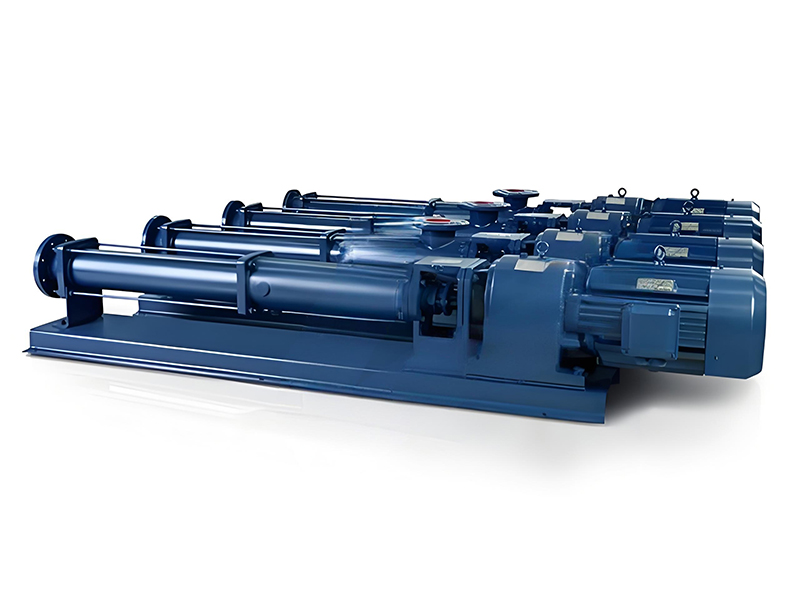
Choosing the right stator for your screw pump or progressive cavity pump system is critical for achieving reliable performance, long service life, and optimized operating costs. This in?depth guide explains the key technical and practical points you should evaluate before specifying or replacing a stator.
The stator is one of the two core components in a screw pump or progressive cavity pump. Together with the rotor, it forms the pumping elements that create sealed cavities to move fluid from the suction side to the discharge side.
In most progressive cavity screw pump systems, the stator is a stationary, helically shaped tube with an internal profile that mates with the rotating screw?shaped rotor. The stator is typically made of an elastomer bonded to a rigid outer tube (often steel), although some applications use fully metallic stators.
A correctly selected stator provides a tight, resilient seal with the rotor, ensuring:
Because the stator is usually the most wear?sensitive and fluid?dependent part of a screw pump, stator selection directly impacts pump reliability, downtime, and total cost of ownership.
The stator in a screw pump system has several essential functions:
The combination of a single?helix rotor and a double?helix stator (with one additional lobe compared to the rotor) creates a series of progressing cavities. As the rotor turns inside the stator, these cavities move axially, transporting the fluid with minimal pulsation.
Discharge pressure is generated by the resistance to flow and the sealing action between rotor and stator. The stator material compressibility, hardness, and geometry define the quality of the seal:
The stator must withstand:
Material compatibility and stator geometry together determine whether the stator can operate for thousands of hours or fail prematurely.
Stator selection affects:
An optimized stator reduces energy costs while maintaining adequate sealing and wear resistance.
To choose the right stator for your screw pump system, consider several groups of parameters. These factors interact, so a holistic approach is essential.
The stator material is one of the most critical choices. In screw pump stators, the internal surface is usually an elastomer, but metallic stators are also used for specific duties.
The table below summarizes typical elastomer categories, their main properties, and typical applications in stator selection.
| Elastomer Type | Key Properties | Typical Temperature Range (°C) | Chemical Resistance | Typical Applications |
|---|---|---|---|---|
| NBR (Nitrile Rubber) | Good oil and fuel resistance, good mechanical strength, widely used, cost?effective | -20 to +100 (depending on grade) | Resistant to oils, fuels, many hydrocarbons; poor resistance to strong oxidizing agents and some solvents | Wastewater, sludge, oils and greases, drilling muds, general industrial fluids |
| HNBR (Hydrogenated NBR) | Improved heat, ozone, and chemical resistance vs. NBR; good mechanical properties | -20 to +140 (approx.) | Better resistance to heat and oxidation; suitable for many oils and chemicals | High?temperature oils, automotive fluids, enhanced?temperature sludge, chemical mixtures |
| EPDM (Ethylene Propylene Diene Rubber) | Excellent resistance to water, steam, many polar chemicals; not suitable for oils | -30 to +140 (approx.) | Resistant to hot water, steam, dilute acids and alkalis; poor resistance to mineral oils and hydrocarbons | Drinking water, chemicals, fertilizers, CIP media, some food and beverage applications |
| FKM (Fluoroelastomer, e.g., FPM) | Outstanding high?temperature and chemical resistance; higher cost | -20 to +180 (or higher, depending on grade) | Resistant to many chemicals, solvents, oils, fuels; limited for hot water and steam | Aggressive chemicals, solvents, high?temperature oils, process fluids with strong solvents |
| Silicone Rubber | Very good low and high?temperature flexibility; lower mechanical strength | -50 to +180 (approx.) | Moderate chemical resistance; not suitable for many oils and fuels | Special temperature applications, some food and pharmaceutical products |
| Natural Rubber (NR) | Excellent elasticity and abrasion resistance; limited chemical resistance | -30 to +80 (approx.) | Sensitive to oils, ozone, and many chemicals | Highly abrasive slurries where chemical exposure is mild; some mining slurries |
| Metal?Bonded Special Elastomers | Formulated for specific duties, including high abrasion, high temperature, or special chemical resistance | Application?specific | Tailored chemical and mechanical performance | Custom screw pump systems in mining, oil and gas, and chemical processing |
Metallic stators are less common but provide unique advantages under certain conditions:
However, metallic stators lack the elastic deformation of rubber, so achieving an effective seal often requires very precise machining and clean, low?abrasion fluids.
When choosing the stator elastomer, examine:
Where possible, obtain a complete list of all fluids that will contact the stator, including intermittent and cleaning fluids. This is essential for screw pump systems in food, beverage, chemical, and wastewater treatment industries.
Elastomer hardness (typically measured in Shore A) influences:
Softer compounds can seal better at lower differential pressures but may wear faster in abrasive environments. Harder compounds resist wear but may require higher drive torque and can be less forgiving to dry running.
The geometry of the stator determines how the rotor fits, how many cavities are formed, and how much pressure can be generated per stage.
In a typical progressive cavity screw pump system:
This difference in lobes creates the moving cavities that define the pump’s characteristic low?pulsation flow.
Pitch is the axial distance between two equivalent points on the stator helix. Stators can have different pitch designs:
In screw pump terminology, a “stage” is one pair of rotor and stator pitches. More stages typically allow higher differential pressure. For example:
Stator length grows with the number of stages. When selecting a stator, verify that the number of stages matches the pressure requirements and available space.
Rotor eccentricity and stator internal diameter define the cavity volume and displacement per revolution. For a given pump model, these are fixed by design, but when comparing screw pump systems, consider:
Stator geometry is therefore directly tied to pump capacity, efficiency, and stator life.
Stator sizing is more than matching model numbers. Tolerances and fit between rotor and stator are essential for proper screw pump operation.
Basic dimensions include:
These are usually defined by the pump manufacturer’s model. For replacement stators, always confirm compatibility with rotor dimensions and drive assembly.
To ensure a proper seal, the rotor is slightly larger than the stator cavities at rest. This creates:
Interference fit must be carefully chosen:
Elastomers swell when exposed to certain fluids and expand with temperature. When selecting a stator, consider:
Often, stators are designed slightly “tight” at ambient conditions, reaching optimal fit when warmed up and swollen in actual operating fluid.
At higher rotor speeds, a thin fluid film may form between rotor and stator, reducing friction but potentially increasing slip. For low?viscosity fluids, stator fit must compensate for possible loss of sealing at high speeds. For high?viscosity fluids, excessive interference fit can cause high shear and overheating.
Even a perfectly selected stator will fail prematurely if the screw pump system operates outside its design window. When specifying a stator, define realistic operating conditions.
Stator design and material must handle:
High differential pressures increase radial loads and friction between rotor and stator, accelerating wear.
Abrasive solids (sand, metal particles, mineral fines) are a common cause of stator wear in screw pump systems.
Screw pumps and progressive cavity pumps are sensitive to dry running because the stator depends on fluid for cooling and lubrication. Consider:
Understanding typical stator wear and failure modes helps in choosing the right stator and optimizing operating practices.
Symptoms:
Prevention:
Symptoms:
Prevention:
Symptoms:
Prevention:
Symptoms:
Prevention:
The following example tables illustrate how to structure and compare stator options for screw pump systems. Values are indicative and should be adapted to specific pump designs and manufacturer data.
| Parameter | Example Value | Notes / Impact on Selection |
|---|---|---|
| Pump Type | Progressive Cavity Screw Pump | Defines basic rotor?stator geometry |
| Stator Material (Elastomer) | NBR, 70 Shore A | Common choice for oily, non?aggressive fluids |
| Outer Tube Material | Carbon Steel | Check for corrosion protection or coating |
| Internal Diameter (Nominal) | 50 mm | Must match rotor profile and displacement |
| Stator Length | 1,200 mm | Determines number of stages, pressure capability |
| Number of Stages | 4 | Higher stages → higher pressure; check drive torque |
| Maximum Differential Pressure | 24 bar | Influenced by geometry, elastomer, speed, and fluid |
| Permissible Temperature Range | -10 to +90 °C | Includes process and cleaning temperatures |
| Recommended Speed Range | 100 to 600 rpm | Higher speeds may reduce stator life in abrasive service |
| Design Flow Rate | 20 m3/h at 300 rpm | Based on rotor?stator displacement and slip |
| Solids Content (Max.) | 5 % by volume | Higher solids may require different elastomer or speed |
| Application Scenario | Recommended Elastomer | Reason | Notes / Alternatives |
|---|---|---|---|
| Municipal sewage sludge with moderate abrasion | NBR or HNBR | Good resistance to oils and typical sewage chemicals | Use abrasion?resistant grade; reduce speed for heavy grit |
| Hot caustic cleaning solutions | EPDM | Excellent resistance to alkaline solutions and hot water | Not suitable for oily or hydrocarbon?rich fluids |
| Solvent?rich chemical mixture | FKM | High resistance to many organic solvents | Check resistance to specific solvent blend; consider metallic stator if extreme |
| Abrasive mineral slurry with low chemical aggressiveness | Natural Rubber or special abrasion?resistant NBR | Good abrasion resistance and elasticity | Speed reduction is critical; monitor wear frequently |
| Food product with CIP cleaning | EPDM (food?grade) | Compatible with water?based media and many cleaning chemicals | Verify food?contact certifications; temperature limits for CIP/SIP |
| Stator Option | Number of Stages | Pitch Type | Max. Differential Pressure | Typical Use |
|---|---|---|---|---|
| Low?Pressure, Short Stator | 2 | Long pitch | 6 bar | Transfer duties with low backpressure, short piping runs |
| Standard?Pressure Stator | 4 | Standard pitch | 12–16 bar | General industrial screw pump applications |
| High?Pressure Stator | 8 | Short pitch | 24–32 bar | Long pipelines, high discharge heads, or dosing into pressurized systems |
The following checklists can be used when specifying a new screw pump stator or selecting a replacement stator for an existing pump.
Proper handling of the stator during installation and operation is as important as correct selection.
There is no universal interval. Stator life depends on fluid abrasiveness, chemical aggressiveness, speed, pressure, temperature, and dry?run events. In clean, non?abrasive service, stators may run for several years. In abrasive sludge or mining applications, replacement intervals can be months. Monitoring performance trends is the most reliable indicator.
Yes, choosing a more chemically resistant or abrasion?resistant elastomer can significantly extend stator life, provided it remains compatible with the fluid and temperature range, and the interference fit is correctly designed. However, changing elastomer type may require re?evaluating torque and temperature limits.
In many screw pump systems, upgrading to a longer, multi?stage stator is possible if space and drive capacity allow. This increases maximum differential pressure but may require a lower speed or more powerful drive. Always check rotor compatibility and manufacturer specifications before changing stage configuration.
Most elastomer stators can only withstand very short periods of dry running. Frictional heat builds quickly, leading to burning and permanent damage. If dry?run events cannot be avoided, consider additional protection systems and stator materials optimized for higher heat resistance, while recognizing that no elastomer is truly dry?run proof.
High?viscosity fluids often allow lower speed operation, which reduces wear. However, excessive viscosity increases torque and may cause overheating if interference is too high. Low?viscosity fluids may require tighter tolerances or different elastomer hardness to maintain sealing and minimize slip, especially at higher speeds.
No. Metallic stators are only suitable for specific applications where extreme chemical or temperature conditions prevent the use of elastomers and where the fluid is relatively clean. Many abrasive or multiphase fluids still rely on elastomer stators because of their resiliency and sealing properties.
Selecting the right stator for a screw pump or progressive cavity pump system is a multi?factor engineering task. The internal stator material, geometry, fit, and operating envelope must all be matched to the process fluid, system pressure, speed, and desired reliability.
Key points for successful stator selection include:
When these factors are evaluated systematically, the resulting stator choice will support stable operation, minimized downtime, and the lowest practical cost per pumped unit of fluid throughout the lifecycle of your screw pump system.
```

Copyright ? Jiangsu Longjie Pump Manufacturing Co., Ltd.



 Phone
Phone
Comment
(0)