

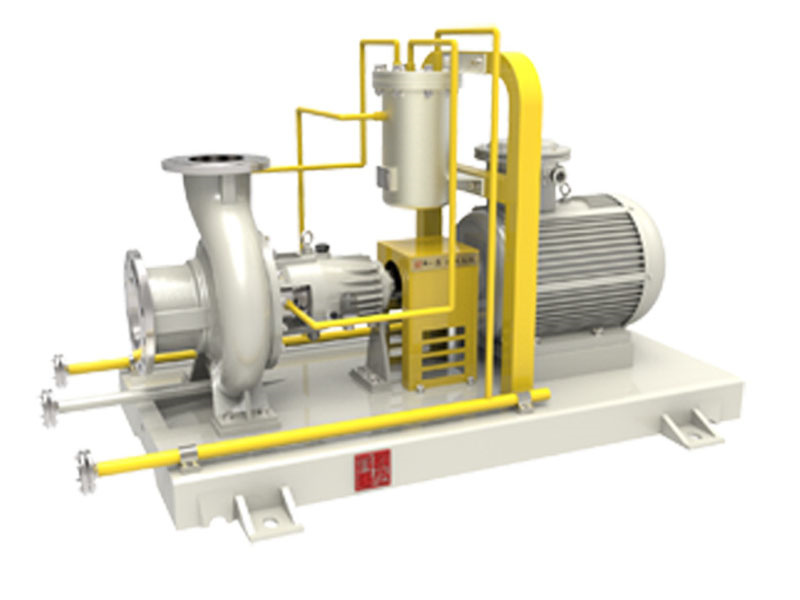
The Efficiency of Stainless Steel Screw Pumps in High-Temperature Applications
Stainless steel screw pumps are widely used in high-temperature applications across
power generation, chemical processing, petrochemical refining, food processing, and
thermal oil systems. Their ability to handle hot, viscous, and sometimes abrasive
media with stable flow and relatively high efficiency makes them one of the most
reliable types of positive displacement pumps for demanding operating conditions.
A stainless steel screw pump is a positive displacement pump that uses one or more
intermeshing screws rotating in a close-fitting housing to move fluid axially from
the inlet to the outlet. The screws trap fluid in cavities and convey it along the
pump body with minimal pulsation. When the wetted parts are manufactured from stainless
steel, the pump offers excellent corrosion resistance and material stability in
high-temperature applications.
Stainless steel screw pumps are commonly classified as:
Single-screw pumps (progressing cavity type) – one rotor and one stator.
Twin-screw pumps – two intermeshing screws, often timing?geared.
Three-screw pumps – one driving screw and two idler screws.
Multi-screw pumps – more than three screws for specialized duties.
Stainless steel is widely chosen for pump construction in high-temperature and
chemically aggressive environments because it maintains mechanical strength at
elevated temperatures, resists oxidation and corrosion, and can be precisely machined
to tight clearances essential for screw pump efficiency.
| Grade |
|---|
| Typical Temperature Range |
|---|
| Corrosion Resistance |
|---|
| Typical Applications |
|---|
| 304 / 1.4301 |
| ?40 °C to ~400 °C |
| Good general corrosion resistance |
| Non?corrosive hot water, oils, low?aggression chemicals |
| 316 / 1.4401 |
| ?40 °C to ~450 °C |
| Better pitting and crevice resistance due to Mo |
| Chemicals, hot seawater, high?chloride fluids |
| 316L / 1.4404 |
| ?60 °C to ~450 °C |
| Improved weldability, reduced carbide precipitation |
| Hygienic processes, welded constructions at high temperatures |
| 321 / 1.4541 |
| ?40 °C to ~870 °C |
| Stabilized for higher temperature service |
| Exhaust gas, thermal oil, high?temperature pipelines |
| Duplex (e.g., 2205) |
| ?50 °C to ~300 °C |
| High strength, very good chloride stress corrosion resistance |
| Offshore, brine, high?pressure and high?stress systems |
To understand the efficiency of stainless steel screw pumps in high-temperature
applications, it is important to distinguish several types of efficiency:
Volumetric efficiency – the ratio of actual flow delivered to
the theoretical flow. It is affected by internal leakage, clearances, and fluid
viscosity.
Mechanical efficiency – the ratio of hydraulic power transferred
to the fluid to the shaft power input. It is influenced by bearing friction,
mechanical losses, and screw engagement.
Hydraulic efficiency – associated with fluid friction, turbulence,
and pressure losses through the pump channels.
Overall efficiency – the product of volumetric, mechanical,
and hydraulic efficiencies:
ηoverall = ηvol × ηmech × ηhyd.
Under appropriately selected operating conditions, stainless steel screw pumps can
achieve high overall efficiencies, particularly when handling viscous fluids where
centrifugal pumps would be less efficient.
| Screw Pump Type |
|---|
| Fluid Viscosity Range |
|---|
| Typical Volumetric Efficiency |
|---|
| Typical Overall Efficiency |
|---|
| Single-screw (progressing cavity) |
| 100–100,000 cP |
| 80–96 % |
| 60–80 % |
| Twin-screw |
| 1–100,000 cP |
| 85–98 % |
| 65–85 % |
| Three-screw |
| 10–5,000 cP |
| 85–98 % |
| 70–88 % |
Actual performance depends heavily on screw geometry, clearances, speed, pressure
differential, temperature, and the specific stainless steel grade used.
In high-temperature applications, all metallic components of a screw pump expand.
Stainless steel has a defined coefficient of thermal expansion, and as temperature
rises, the screws and housing expand at different rates. This behavior directly
affects volumetric efficiency:
Too small cold clearances can lead to contact and wear at operating temperature.
Too large hot clearances can increase internal leakage and reduce efficiency.
Proper thermal design balances these factors by predicting dimensional changes at
the maximum operating temperature and designing cold clearances accordingly.
In most liquids, viscosity decreases as temperature increases. For screw pumps,
viscosity has a complex influence on efficiency:
High viscosity tends to reduce internal leakage, improving
volumetric efficiency, but it increases friction losses and power consumption.
Low viscosity reduces mechanical and hydraulic losses but can
significantly increase slip, reducing volumetric efficiency.
For high-temperature thermal oils, polymers, or heavy fuels, operating at a properly
selected temperature can optimize the balance between these effects.
At high temperatures, stainless steel retains more of its strength compared with
carbon steel, especially above 300 °C. This strength retention helps maintain
the shape and surface finish of screws and housings over long operating periods,
which is crucial for sustained efficiency. However, high temperatures can accelerate:
Wear and galling in metal?to?metal contact areas.
Oxidation of surfaces exposed to high?temperature fluids and oxygen.
Degradation of elastomeric seals, bearings, and lubricants if not correctly selected.
Mechanical seals, packing, and shaft seals are critical to both safety and efficiency
in high-temperature screw pump systems. At elevated temperatures:
Seal faces can distort, increasing leakage and power loss.
Standard elastomers can harden, crack, or lose resilience, causing increased
leakage and potential dry running.
Using high?temperature seal materials and appropriate cooling or quench systems
contributes to stable and efficient pump operation.
The geometry of the screws has a direct impact on efficiency, particularly at
high temperature:
Pitch and lead optimized for the required flow and pressure.
Profile designed to minimize shear and pulsation.
Surface finish polished to reduce friction and leakage paths.
Screw pumps used in high-temperature services require precise machining of the
screws and housings to maintain efficiency across a wide temperature range. For
stainless steel screw pumps:
Manufacturing tolerances are carefully controlled to anticipate thermal expansion.
Clearances are calculated for the highest operating temperature, balancing
safety and efficiency.
Bearings and seals must be selected to match the high-temperature duty. High-quality
bearings with suitable clearances and materials such as ceramic or specialized
steel alloys may be used. Mechanical seal faces can be made from hard materials
such as silicon carbide or tungsten carbide with high?temperature secondary sealing
elements.
For extremely high process temperatures, thermal management systems are often
integrated into the pump design:
Cooling jackets around the bearing housing or seal chamber.
Heat barriers or thermal breaks between hot process fluid and
bearings.
External cooling circuits to maintain lubricant and seal
temperature within recommended limits.
Apart from base stainless steel grades, surface engineering can be used to enhance
efficiency and reliability:
Hard coatings on screws to reduce wear and friction at high temperature.
Nitriding or surface hardening for improved abrasion resistance.
Passivation to maximize corrosion resistance in hot environments.
Screw pumps are known for delivering a nearly pulsation?free flow, which is
particularly valuable in high-temperature systems where pressure fluctuations can
amplify thermal stress. Continuous, smooth flow improves:
Heat transfer efficiency in thermal oil circuits.
Process stability in reactors and heat exchangers.
Accuracy in dosing and metering of hot viscous fluids.
Stainless steel screw pumps exhibit strong suction lift, enabling them to effectively
prime hot viscous liquids. In many high-temperature installations, the pump may be
installed at or above the fluid level; the high suction capability helps maintain
reliable operation and reduces the risk of cavitation.
High-temperature processes often involve fluids whose viscosity changes dramatically
with temperature. Stainless steel screw pumps can handle viscosities from thin,
heated fuels to thick, partially polymerized resins, maintaining good efficiency
across the range.
Many screw pumps are self?priming when properly configured, which simplifies
start?up procedures in hot service duties. Certain designs can also run
bi?directionally, allowing the same pump to load and unload high?temperature tanks,
or to reverse flow direction during process sequences.
In many high-temperature applications, energy costs dominate life?cycle costs. A
correctly sized stainless steel screw pump can deliver:
High overall efficiency, especially for viscous fluids.
Lower required motor power compared with less efficient alternatives.
Reduced heat generation within the pump, which limits additional cooling
requirements.
Stainless steel offers excellent resistance to high?temperature oxidation and
corrosion, which translates into long service life. Properly designed stainless
steel screw pumps maintain tight internal clearances over years of operation,
preserving efficiency and reducing the need for frequent overhauls.
Stainless steel screw pumps are deployed in a broad range of high-temperature
applications. The following table outlines common use cases, typical operating
temperature ranges, and the key efficiency considerations.
| Application |
|---|
| Typical Temperature Range |
|---|
| Fluid Type |
|---|
| Key Efficiency Considerations |
|---|
| Thermal oil circulation |
| 150–350 °C |
| Heat transfer oils, synthetic thermal fluids |
| Maintaining viscosity within an optimal range; minimizing leakage at high temperature |
| Power generation lube oil systems |
| 60–120 °C |
| Lubricating oils, turbine oils |
| Low?pulsation flow for bearings; high volumetric efficiency at moderate viscosity |
| Refined and heavy fuel oil transfer |
| 80–200 °C |
| Fuel oils, heavy marine fuels |
| Viscosity management, suction performance, and reduced slip |
| Chemical process streams |
| 100–300 °C |
| Acids, bases, solvents, intermediates |
| Material compatibility, corrosion resistance, tight clearances |
| Polymer and resin transfer |
| 120–280 °C |
| Resins, adhesives, polymers |
| Handling highly viscous, shear?sensitive fluids without degradation |
| Food and beverage (hot processes) |
| 80–160 °C |
| Edible oils, chocolate, syrup, fats |
| Hygienic design, CIP/SIP compatibility, gentle handling of product |
| Bitumen and asphalt pumping |
| 150–220 °C |
| Asphalt, bitumen |
| High viscosity efficiency, abrasion resistance, temperature?stable seals |
When specifying a stainless steel screw pump for high?temperature service, several
technical parameters must be evaluated together. The table below summarizes typical
specification ranges for industrial stainless steel screw pumps used in hot duty
applications.
| Parameter |
|---|
| Typical Range |
|---|
| Design Considerations for High Temperature |
|---|
| Flow rate |
| 0.1 to >1,000 m3/h |
| Correct sizing to avoid excessive speed or slip at temperature extremes |
| Differential pressure |
| Up to ~80 bar (depending on design) |
| Thermal expansion and material strength at maximum differential pressure |
| Operating temperature |
| ?40 to >350 °C |
| Selection of stainless steel grade, seals, and bearings for temperature range |
| Viscosity range |
| 1–100,000 cP or higher |
| Balancing volumetric and mechanical efficiency over viscosity range |
| Speed (rpm) |
| 200–4,000 rpm |
| Lower speeds for high viscosity and high temperature to reduce wear |
| Suction conditions |
| Atmospheric to vacuum |
| Net Positive Suction Head (NPSH) available versus required, especially for hot fluids |
| Construction materials |
| 304, 316, 316L, 321, duplex stainless steels |
| Compatibility with chemical composition and temperature of the fluid |
| Seal type |
| Mechanical seal, packing, magnetically coupled |
| High-temperature ratings, cooling/flush plans, and emissions control |
| Bearing type |
| Rolling element, hydrodynamic, or sleeve bearings |
| High-temperature lubrication, thermal growth control, and axial load capacity |
| Mounting and drive |
| Horizontal/vertical, direct or gear?driven |
| Alignment stability and thermal expansion in the drive train |
In high-temperature applications, plant designers frequently compare stainless
steel screw pumps with centrifugal pumps, gear pumps, and other positive displacement
technologies. Each type has its own efficiency profile and operating window.
| Pump Type |
|---|
| Temperature Capability |
|---|
| Viscosity Handling |
|---|
| Typical Efficiency Range |
|---|
| Main Advantages at High Temperature |
|---|
| Stainless steel screw pump |
| Up to >350 °C (design-dependent) |
| Very wide; from low to extremely high viscosity |
| Overall 60–88 % |
| High volumetric efficiency for viscous fluids, low pulsation, good suction capability |
| Centrifugal pump (stainless steel) |
| Up to ~400 °C with special design |
| Best for low to moderate viscosity |
| Overall 50–85 % |
| Simple design, high flow rates, efficient for low?viscosity hot fluids |
| Gear pump (stainless steel) |
| Typically up to 250–300 °C |
| Moderate to high viscosity |
| Overall 50–80 % |
| Compact, good for dosing, but potentially higher pulsation and wear |
| Lobe pump (stainless steel) |
| Up to 150–200 °C (hygienic designs) |
| High viscosity, shear?sensitive fluids |
| Overall 40–75 % |
| Gentle handling and CIP/SIP capability, suitable for food and pharma |
| Piston/diaphragm pump |
| Up to ~200 °C (depending on elastomers) |
| Wide range, including slurries |
| Overall 40–75 % |
| High pressure capability, good for metering small flows |
Every stainless steel screw pump has an optimal operating range for flow, pressure,
and speed. Operating too far from this range can reduce efficiency:
Too low flow rates can lead to overheating, excessive slip, and inefficient operation.
Excessive differential pressure can increase internal leakage and mechanical
losses.
High-temperature systems often experience changes in fluid viscosity during
startup and shutdown. Starting the pump when the fluid is cold and more viscous
increases the load on the pump and driver. Proper start?up procedures and, where
needed, pre?heating of fluids improve both efficiency and reliability.
In high-temperature applications, available NPSH (Net Positive Suction Head) can be
limited because the vapor pressure of the fluid increases with temperature. Screw
pumps typically require lower NPSH than centrifugal pumps, but:
If NPSH is insufficient, cavitation can occur, causing noise, vibration, efficiency
loss, and component damage.
Adequate suction line design and, if needed, system pressurization mitigate
this risk.
Over time, wear and corrosion increase internal clearances and roughen surfaces,
directly reducing volumetric and hydraulic efficiency. Hot fluids may also cause
fouling or deposit formation inside the pump. Selecting corrosion?resistant stainless
steel, using appropriate filtration, and scheduling periodic inspection help maintain
efficiency.
Thermal expansion in high-temperature installations can lead to misalignment between
the pump and driver. Misalignment causes additional mechanical losses and can
accelerate wear. Allowing for thermal growth in alignment procedures and using
flexible couplings reduces this effect and protects pump efficiency.
A detailed understanding of process conditions is the foundation of efficient screw
pump selection for high?temperature service. Important parameters include:
Normal, minimum, and maximum operating temperatures.
Viscosity vs. temperature behavior of the fluid.
Required flow rate and pressure differential.
Fluid composition, including solids or gas content.
Suction conditions and available NPSH.
Choosing the appropriate stainless steel grade is essential:
Use lower alloy grades like 304 for general, non?corrosive hot oil duties.
Select 316/316L or duplex stainless steel for aggressive or chloride?rich fluids.
Consider 321 or other stabilized grades for very high?temperature environments.
Pump size should be chosen so that the duty point lies in the high?efficiency range
of the pump. Oversizing can lead to operation at low speeds and partial fill of the
screws, while undersizing may force the pump to run at high speeds with excessive
wear and losses. Selecting an appropriate drive (e.g., variable frequency drive)
allows fine?tuning of speed for optimal efficiency at different operating points.
For high-temperature applications, mechanical seals and bearings must be matched
to the process:
Choose seal materials rated for maximum process and flush temperatures.
Consider double mechanical seals with barrier fluids for hazardous hot media.
Specify bearings capable of operating reliably at elevated ambient and fluid
temperatures.
Depending on the target temperature:
Use cooling jackets on the bearing housing where necessary.
Isolate hot process sections from sensitive support components.
Ensure proper insulation of the piping and pump casing to stabilize temperature.
High-temperature duty tends to accelerate wear. Regularly check:
Screw condition (profile, surface roughness, and any scoring).
Bearing clearances and lubricants.
Seal faces and leakage levels.
A gradual decline in efficiency may go unnoticed unless key parameters are tracked:
Flow rate at a constant speed and pressure.
Power consumption vs. historical baseline.
Temperature rise across the pump.
Vibration and noise levels.
Lubricants used in bearings and gear couplings must withstand high temperatures
without degradation. Regular oil sampling and analysis can detect oxidation or
contamination early. In some designs, the pumped fluid itself acts as lubricant
for screws and bearings, making fluid cleanliness and compatibility essential.
For applications involving polymers, resins, or fluids prone to coking at high
temperatures, periodic cleaning is important. Techniques include:
Flushing with compatible solvents.
Controlled temperature ramps to avoid solidification in the pump.
CIP (clean?in?place) systems for hygienic and food processes.
The power required by a stainless steel screw pump can be approximated as:
P = (Q × ΔP) / (η × 3,600)
where:
P is power in kW.
Q is flow rate in m3/h.
ΔP is differential pressure in kPa.
η is overall efficiency (decimal).
Higher pump efficiency (η) directly reduces energy consumption, which is
especially significant in continuous high-temperature service where pumps run
24/7.
While high-quality stainless steel screw pumps may have higher initial purchase
costs than simpler alternatives, the total cost of ownership is often lower due to:
Lower energy use over the pump life.
Reduced downtime and fewer unplanned outages.
Longer intervals between major overhauls.
When comparing options, it is useful to evaluate capital cost, energy cost, and
maintenance cost over a typical life cycle (for example, 10–20 years).
High-temperature screw pump installations involve significant thermal stresses.
Stainless steel construction provides a favorable combination of strength, toughness,
and thermal expansion characteristics, reducing the likelihood of cracking, leakage,
or deformation that could compromise efficiency and safety.
Efficient operation requires continuous lubrication and adequate fluid cooling.
Dry running or running with insufficient fluid can quickly damage stainless steel
screw pumps even though the material itself is heat resistant. Protective measures
include:
Temperature sensors and alarms on casing or bearings.
Flow switches to confirm circulation through the pump.
Automatic shutdown logic in control systems.
In many high-temperature chemical and hydrocarbon applications, emissions control
is closely regulated. Efficient sealing systems and leak?tight stainless steel
construction help minimize fugitive emissions and environmental impact, aligning
operational efficiency with regulatory compliance.
Ongoing material development aims to push the temperature and pressure limits of
screw pumps further while maintaining high efficiency. Trends include:
Use of duplex and super?duplex stainless steels for higher strength and corrosion resistance.
Hybrid constructions that combine stainless steel with wear?resistant inserts or coatings.
Improved high-temperature elastomers and polymer components.
Integration of sensors and digital monitoring tools is becoming common in high?value
screw pump installations. Real?time data on vibration, temperature, power consumption,
and flow enables:
Continuous efficiency tracking.
Early detection of deviation from optimal performance.
Predictive maintenance scheduling to avoid unplanned shutdowns.
Advanced computational fluid dynamics (CFD) and finite element analysis (FEA) are
used to optimize screw geometry, casing shape, and internal clearances for maximum
efficiency at targeted high?temperature conditions. Such tools allow pump designers
to fine?tune designs for specific applications rather than relying solely on
generalized configurations.
Stainless steel screw pumps provide an efficient, reliable solution for moving
high-temperature fluids in many demanding industrial processes. Their ability to
handle wide viscosity ranges, deliver smooth and continuous flow, and maintain
high volumetric efficiency under thermal stress makes them particularly attractive
for thermal oil systems, chemical processing, power plant lubrication, fuel oil
handling, polymer transfer, and hot food processing.
Achieving and maintaining high efficiency requires careful attention to pump
selection, stainless steel material grade, screw geometry, internal clearances,
sealing, bearing design, and thermal management. In real-world operation, proper
installation, monitoring, and maintenance are equally important to preserve
efficiency and extend service life.
By understanding how temperature, viscosity, and operating conditions influence
the efficiency of stainless steel screw pumps, plant engineers and operators can
optimize energy consumption, ensure process stability, and reduce total cost of
ownership in high-temperature applications.
```

Copyright ? Jiangsu Longjie Pump Manufacturing Co., Ltd.



 Phone
Phone
Comment
(0)